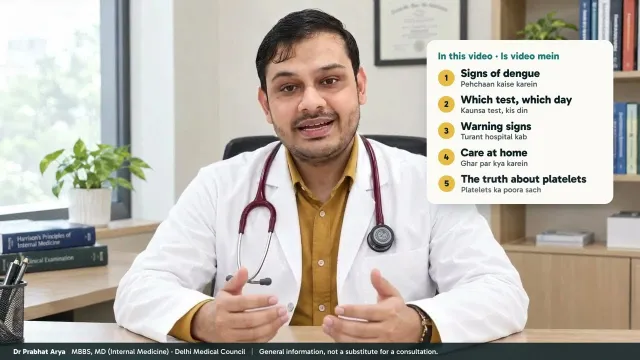
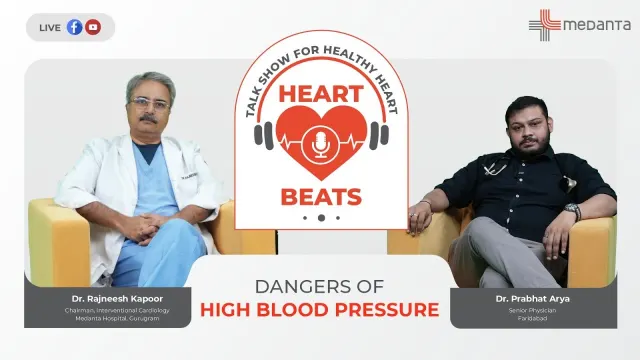
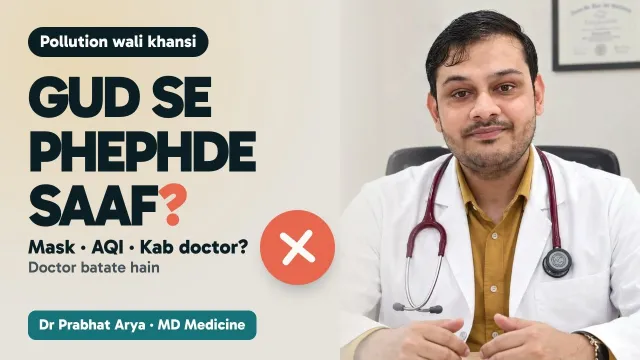
Dr. Prabhat Arya is a physician who looks at all of you at once.
Internal medicine — often called MD Medicine, and its doctor a general physician — is the branch of medicine for adults’ illnesses that are looked after with medicines, tests and follow-up rather than with an operation.
A physician’s particular job is to see how several problems — and several medicines — affect one another in the same person: the sugar, the blood pressure, the fever and the pile of reports in between.
He consults by video call, so you can be seen from home with your reports in your hand.
A physician in internal medicine sees illness of every organ, every cause of fever, and the everyday complaints in between. Some things need a hospital or an examination in person, and he will say so plainly.
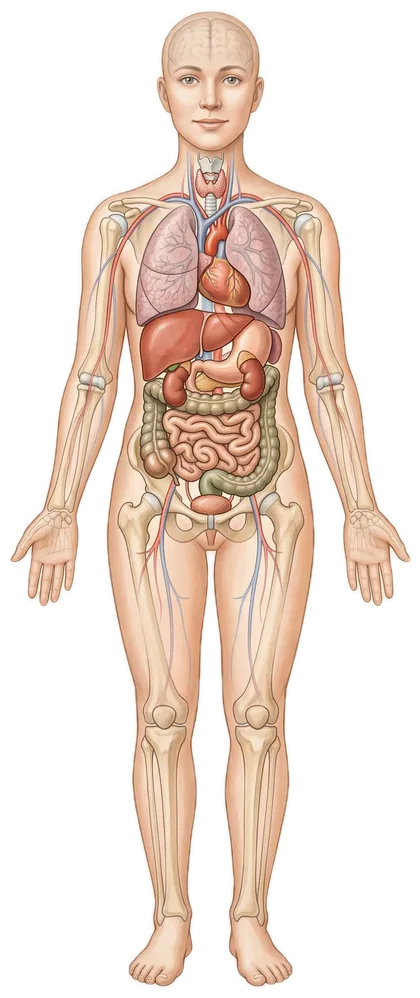
Scroll slowly, and the blood will carry you through the body.
In through a vein
The vein at the inner elbow, where blood is taken for tests. The blood in it is on its way back to the heart.
Have ready: your CBC reports, old and new; iron and B12 reports if done; whether you are vegetarian; for women, whether periods are heavy; your medicines.
Have ready: your temperature readings with times, how many days it has lasted, any test reports (blood count, dengue, typhoid, malaria, urine), and what you have already taken.
The body turning its own thermostat up, most often to fight a virus.
Go to hospital now if fever comes with drowsiness or confusion, a stiff neck, a fit, breathlessness, bleeding from the gums or nose, very little urine, or, in dengue, severe tummy pain, repeated vomiting, feeling faint, or cold, clammy hands and feet, even once the fever has settled.
Heart and BP
Raised BP readings at home, a cholesterol report, heart disease in the family, heart failure that needs regular follow-up, and the question of whether a medicine is still right. He looks at your risk as a whole, not at one number.
Have ready: a week of home BP readings, morning and evening; your lipid profile; any ECG or echo report; with heart failure, your weight each morning; your current medicines.
The heart’s own arteries
The heart muscle gets its own blood through small arteries on its surface, the coronary arteries.
Now the years go by
Cholesterol travels in the blood in tiny parcels. When there is too much of the kind called LDL, it slowly settles into the walls of the arteries and builds up there, usually for years without a single symptom.
Scroll back up to turn back the years.
Narrowed
A fatty plaque narrows one of the heart’s own arteries. At rest, enough blood still gets through to the muscle beyond it.
On effort the heart beats faster and needs more blood than the narrowed artery can carry. The muscle beyond it runs short and hurts. Rest lets it recover within minutes.
Heart attack
The plaque cracks and a clot forms on it, blocking the artery completely. The muscle beyond starts to die unless the artery is opened quickly: call 112.
Go to hospital now if there is chest pain or pressure, including heaviness spreading to the arm, jaw or back, or coming with sweating, even if it feels like gas; sudden or worsening breathlessness; or fainting. That is not for a video call: call 112.
Asthma or COPD that is not well controlled, a cough or chest infection, colds and sore throats that keep coming back, and allergies with sneezing, runny nose or wheeze.
Have ready: how long the cough has lasted, your temperature readings, any chest X-ray, your inhalers (he may ask you to show how you use them), and oxygen readings if you have a pulse oximeter.
Airways that squeeze, swell and fill with mucus. The right inhalers keep them calm.
Go to hospital now if you are too breathless to finish a sentence, your lips or face turn blue or grey, your reliever inhaler is not helping, your oxygen reading stays below 92% (or below your usual, if you have COPD), or you cough up blood.
Have ready: a diary of the headaches or fits (when, how long, what happened), any CT or MRI report, your sugar and BP readings, your medicine strips, and a video of a fit if someone recorded one.
A blocked or burst artery in the brain. Face drooping, arm weak, speech slurred: call 112 at once.
Go to hospital now if the face droops, an arm or leg suddenly goes weak, sight is suddenly lost, speech is suddenly slurred, the worst headache of your life comes on suddenly, there is a first-ever fit, a fit lasts more than five minutes, or fits come one after another. Call 112; every minute counts.
Sugar, thyroid and hormones
High sugar readings or a new diagnosis of diabetes, thyroid reports that don’t look right, other hormone and metabolic problems, and tiredness nobody has explained. He goes through your readings, your meals and routine, and every medicine you take.
Have ready: glucometer readings with dates and times, your latest HbA1c and thyroid (TSH) reports, and the strips of the medicines you take.
Too much sugar stays in the blood, because insulin is missing or not working well.
Go to hospital now if a very high sugar comes with vomiting, drowsiness or fast breathing: call 112. If a low sugar with sweating or shaking does not improve after taking sugar, call 112 and keep taking sugar while you wait, if you can swallow safely. If a low sugar comes with confusion but the person can swallow safely, give sugar and call 112. If they are drowsy, having a fit or cannot swallow safely, call 112 and give nothing by mouth.
Weight that keeps creeping up, a waist that has grown, weight that came with sugar, BP, thyroid or fatty liver, or medicines that may be adding kilos. He looks for the reasons behind it — thyroid, sugar, sleep, medicines, meals and the day’s routine — and makes a plan you can keep: food, activity and, where it suits you, medicine. No crash diets, and no promised kilos.
Have ready: your weight and waist measured in the morning, your height, recent sugar, thyroid, cholesterol and liver reports, and a note of what you eat on a normal day.
Have ready: your liver function tests, ultrasound report and hepatitis reports; how much alcohol you drink, honestly; every medicine, tonic and supplement you take.
Have ready: how long it has been going on, what makes it better or worse, any stool, blood or scan reports, endoscopy or colonoscopy reports, and the medicines you have tried.
Stomach acid burning where it shouldn’t: up the food pipe, or on an irritated stomach lining.
Go to hospital now if you vomit blood, stools turn black, you pass a lot of blood, there is severe tummy pain, you feel faint, or you cannot keep fluids down or pass very little urine.
Have ready: your creatinine and urine reports, older ones too so he can see the trend; any ultrasound; your BP readings; and every medicine, because some doses change when the kidneys are weak.
Slow loss of the kidneys’ filters, often from sugar or BP. Silent until late.
Go to hospital now if you pass very little or no urine, or have severe pain in the side with fever, shivering or vomiting.
Joints
Joint pain and stiffness, swollen joints, arthritis, and gout with high uric acid.
Have ready: which joints hurt, whether they are stiff in the morning and for how long, your uric acid and other blood reports, any X-rays, and which painkillers you take and how often.
Have ready: clear photos in daylight, taken on different days; what you have applied or taken; and any new medicine, soap or food just before it started.
A pocket of pus around a hair root. Spreading redness or fever needs a doctor.
Go to hospital now if a rash comes with swelling of the lips, tongue or face or with trouble breathing, or with fever and blistering or peeling skin.
Everyday illness
Body ache, weakness, poor appetite, a cold that lingers; the common illnesses everyone gets. And the bigger picture: a stack of reports nobody explained, many medicines from different doctors, an older parent with several conditions at once. He reads it all together and explains it in plain words.
Have ready: all reports in date order, every medicine strip or a photo of it, and your previous prescriptions.
One complaint. Many possible reasons.
Here is how a consultation thinks through three everyday complaints. They are examples of the method, not advice for you.
Sample reportMade-up values for an adult woman, not a real patient
Test
Result
Usual range
Haemoglobin
11.2 g/dL
12–15
Fasting glucose
118 mg/dL
70–99
HbA1c
6.1 %
below 5.7
TSH
6.8 µIU/mL
0.4–4.5
LDL cholesterol
142 mg/dL
below 100
Creatinine
0.9 mg/dL
0.6–1.1
Usual ranges differ a little between laboratories.
Haemoglobin The oxygen-carrying part of blood. Slightly low here, so he would ask about diet, periods and any blood loss, and may check iron.
Fasting glucose Sugar after an overnight fast. 100 to 125 is often called “prediabetes”; he would repeat it and look at HbA1c before calling it anything.
HbA1c Your average sugar over about three months. 5.7 to 6.4 is the range often called “prediabetes”; 6.5 or above on repeat testing suggests diabetes.
TSH The brain’s signal to the thyroid. A raised TSH can mean an underactive thyroid; he would look at T4 and your symptoms, and repeat the test.
LDL cholesterol The cholesterol that builds up in arteries. Whether it needs a medicine depends on your overall heart risk, not on this number alone.
Creatinine A marker of how well the kidneys filter. Normal here, and a normal line matters too: it tells him which medicines are safe for you.
Keep your reports, medicine strips and readings beside you. Sit somewhere quiet, in good light, with a charged phone.
3
The call
He asks, listens, looks at what the camera can show, and goes through your reports with you.
4
After
If medicines are needed, a prescription with his name, qualification, registration number and signature, as the Telemedicine Practice Guidelines require — plus what to test, and when to follow up.
A video call can
Take a full history
Go through reports and medicines
Follow up an ongoing illness
Decide whether you need to be seen in person
A video call cannot
Replace a physical examination
Handle an emergency
Be used for some medicines that the law does not allow to be prescribed online
Stop. This needs a hospital, not a video call.
Chest pain or pressure
Sudden weakness of the face, arm or leg, or trouble speaking
Severe breathlessness
Fainting, fits, or new confusion
Heavy bleeding, or vomiting blood
A serious injury or burn
Call 112or go to the nearest emergency department. For an ambulance you can also dial 108 (102 in some states).
Thoughts of harming yourself? Call Tele-MANAS on 14416, free, any time. If you are in danger right now, call 112.
Get to know Dr. Arya.
Name
Dr. Prabhat Arya
Qualifications
MBBS, MD (Internal Medicine)
Registration
Delhi Medical Council, Reg. No. DMC-83759
Government registry
Healthcare Professionals Registry (Ayushman Bharat Digital Mission), HPR ID 71-6025-4163-3126
Consults
By video call, anywhere in India
Hours
Monday to Saturday, 10 am to 1 pm and 5 to 9 pm (India time). Sundays: SOS requests only
Fees
₹600 quick follow-up, up to 5 minutes (returning patients only) · ₹1,000 regular, up to 15 minutes · ₹1,500 deep dive, no fixed time limit · ₹2,000 SOS, on any day (on Sundays, the only consultation)
After the consultation
Every consultation, at every fee, includes four weeks of care afterwards. Send your questions and test reports in the app, and he answers by the next Monday or Thursday. A test he orders is followed until you are told the result, even after the four weeks.