A kidney stone is salt in the urine turning solid.
Urine carries away salts and waste the body does not need. When urine is too concentrated, some of them, most often calcium oxalate, form crystals that clump into a stone. A stone can sit in the kidney for years without pain. The trouble usually starts when it moves into the ureter, the thin tube down to the bladder.
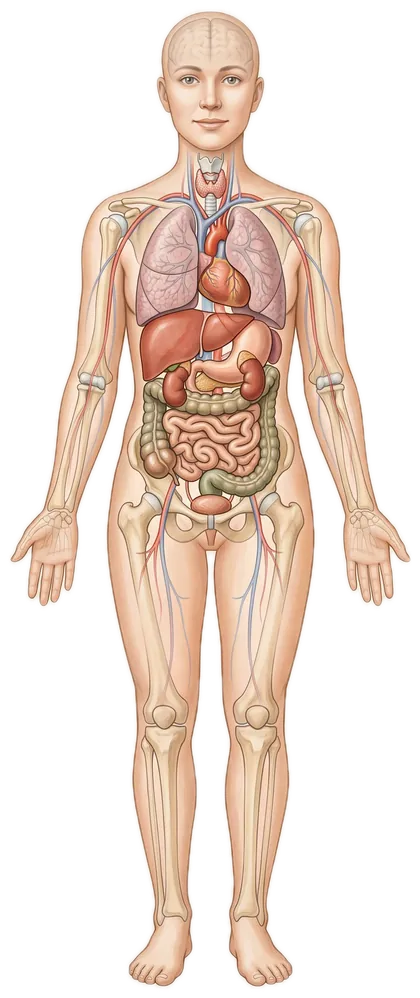
In plain words.
Stones are common in north India, where summers are hot and many people drink too little water. Other things that make them more likely: stones in the family, being overweight, diabetes, gout or a high uric acid, repeated urine infections, a salty diet, a lot of meat, and some medicines.
A stone moving down the ureter causes renal colic: sudden, severe pain in the side or back, coming in waves and often spreading to the lower tummy and groin. People often cannot keep still. There may be vomiting, and blood in the urine, sometimes seen only on a test. Blood in the urine without any pain, especially after the age of 40, is different: see a doctor soon, as it needs checking for other causes.
Most stones smaller than about 5 mm pass on their own within a few days to weeks, helped by painkillers and sometimes a medicine that relaxes the ureter. Larger stones, or ones that block the flow, may need a urologist: shock-wave treatment, a thin telescope passed up the urine tube, or keyhole surgery. About half of people who have one stone form another within ten years, so prevention matters.
How a stone travels
Crystals in concentrated urine clump together into a stone. While it sits in the kidney, it often causes no pain at all.
When a stone slips into the ureter, the tube squeezes hard to push it along. That gives sudden, severe pain in waves, from the side down towards the groin.
Plenty of water keeps urine pale and flowing. Small stones wash down into the bladder and out, and new crystals are less likely to form.
Go to hospital now if
- Stone pain with fever or shivering: go to hospital now. A blocked kidney with infection behind it is an emergency.
- You pass very little or no urine: go to hospital now.
- The pain is too severe to bear, or vomiting means you cannot keep fluids or tablets down: go to hospital now.
- You have only one working kidney or a kidney transplant, or you are pregnant or could be pregnant, and have stone pain: go to hospital now.
- Sudden, severe pain or swelling in a testicle: go to hospital now. A twisted testicle needs treatment within hours.
- You are over 50 and have sudden, severe pain in the side, back or tummy for the first time, especially if you feel faint: call 112. A leaking main artery (aortic aneurysm) can look just like a stone.
Call 112 or go to the nearest emergency department. Ambulance: 108 (102 in some states).
See a doctor within a day if
- This is your first episode of stone-like pain, even if it has settled
- Pain keeps coming back over several days
- Burning or cloudy urine along with the pain
- You have diabetes or kidney disease
Tests that help.
Not everyone needs every test. He decides which ones are worth doing for you.
| Test | What it tells |
|---|---|
| Urine routine | Red cells in the urine support a stone; pus cells suggest an infection as well. |
| Ultrasound of the kidneys, ureters and bladder (KUB) | Shows most stones in the kidney and any swelling from a blockage. No radiation, so it suits pregnancy too. |
| Plain CT scan of the KUB | The most accurate test: finds almost every stone, its size, and where it is stuck. |
| Kidney function (creatinine) and blood count | Checks that the kidneys are working, and looks for infection. |
| Calcium and uric acid in the blood | High levels can cause stones. |
| Stone analysis, and a 24-hour urine test | If you pass a stone, keep it for testing. For repeated stones, a 24-hour urine collection shows what to change. |
Have it ready.
Tick them off as you gather them. The ticks stay on this phone only.
Online, or in person?
Painkillers such as diclofenac work well for stone pain, but can harm weak kidneys and are unsafe in pregnancy, so take them only as a doctor advises. A stone that has stopped hurting can still be blocking a kidney silently: have the follow-up scan.
A video call can
- Tell likely stone pain from other causes, and whether it needs a hospital
- Arrange the right tests, and go through the scan reports with you
- Plan pain relief, and a medicine that can help a small stone pass
- Work out why stones keep forming, and plan how to prevent the next one
Needs a visit in person
- Ultrasound or CT scans, and blood and urine tests
- Injected pain relief and a drip for severe pain or vomiting
- A urologist for large stones, a blocked kidney or infection
- Any sign in the red box: that is an emergency

Talk it through with Dr. Arya.
Bring your reports and medicines to a video consultation. He goes through them with you, in plain words, and says clearly if you need to be seen in person.
Book a video consultationDr. Prabhat Arya · MBBS, MD (Internal Medicine) · Delhi Medical Council Reg. No. DMC-83759