Constipation usually eases with fibre, water and a daily walk.
Constipation means passing stools less often than is usual for you, often fewer than three times a week, or hard, dry stools that need straining, or a feeling of not having emptied. What counts as normal varies widely, from three times a day to three times a week.
In plain words.
Why stools turn hard: the large bowel takes water back from what passes through it. The longer stool sits there, the more water is drawn out and the harder it gets. Too little fibre, too little water, sitting most of the day, putting off the urge, travel and a change of routine are the most common reasons.
Medicines and conditions can cause it too: iron and calcium tablets, some painkillers such as tramadol or codeine, some medicines for BP, allergies, mood or acidity. An underactive thyroid, diabetes, pregnancy, IBS and Parkinson’s disease slow the bowel. Piles or a small tear (fissure) make passing stool painful, so people hold back, which makes it worse.
When it needs a closer look: a new change in bowel habit that lasts for weeks, especially after the age of 50, or constipation with blood, weight loss or anaemia. These can be signs of a growth in the bowel, which is best found early. Most constipation is not serious, but these signs should not be put down to diet.
Along the large bowel
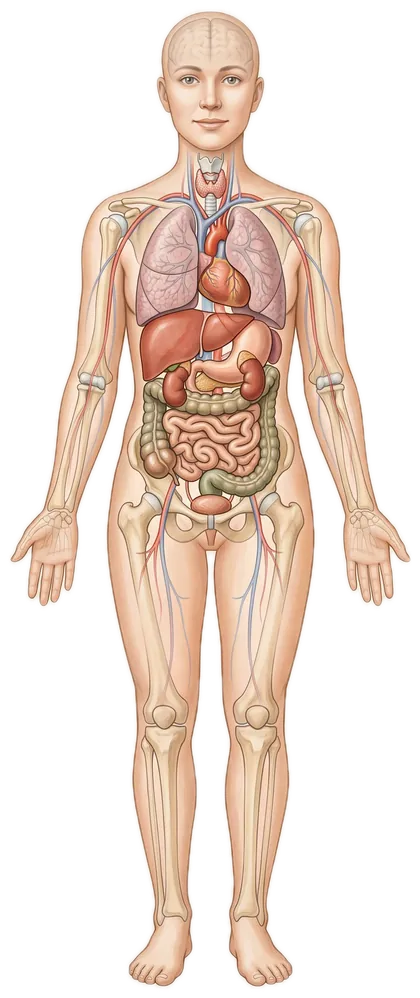
The large bowel runs up the right side of the belly, across, and down the left side to the rectum. Stool moves along in slow waves while the bowel takes back water, leaving it soft and formed.
When stool moves slowly, the bowel keeps drawing water out of it. It dries into small hard lumps that pile up near the end and are hard to pass.
Fibre from whole grains, dal, fruit, vegetables and isabgol holds on to water, so the stool stays soft and bulky. Enough water and a daily walk help the bowel keep it moving.
Go to hospital now if
- No stool and no wind at all, with a swollen, tight tummy and vomiting: go to hospital now. The bowel may be blocked.
- Severe tummy pain that does not ease, or tummy pain with fever: go to hospital now.
- Passing a lot of blood, black, sticky, tarry stools (not just the dark stools iron tablets cause), or feeling faint: go to hospital now.
- New weakness or numbness in the legs, numbness between the legs, or losing control of urine: go to hospital now.
- In an older person: constipation with new confusion, or watery stool leaking around a hard blockage: see a doctor today.
Call 112 or go to the nearest emergency department. Ambulance: 108 (102 in some states).
See a doctor within a week if
- A change in your bowel habit has lasted more than three weeks, especially after the age of 50
- There is blood mixed in or on the stool
- You are losing weight without trying, or feel tired and look pale
- Constipation takes turns with loose motions
- You have needed laxatives most days for more than a few weeks
- Passing stool is so painful that you hold back
Tests that help.
Not everyone needs every test. He decides which ones are worth doing for you.
| Test | What it tells |
|---|---|
| Usually none | Most constipation needs no test. Tests are for warning signs, or when it does not settle. |
| Thyroid (TSH), calcium, sugar | Look for an underactive thyroid, high calcium or diabetes, which slow the bowel. |
| Complete blood count (CBC) | Looks for anaemia, which with a change in bowel habit needs a closer look. |
| Stool test for hidden blood | Picks up bleeding too small to see. A positive result needs a colonoscopy. |
| Colonoscopy | A camera passed through the back passage to look at the whole large bowel, done in person. Advised for warning signs, or for new constipation later in life. |
Have it ready.
Tick them off as you gather them. The ticks stay on this phone only.
Online, or in person?
Isabgol and other fibre need plenty of water, or they can make things worse. Stimulant laxatives such as senna or bisacodyl, and many herbal churans that contain them, are meant for short spells; taken daily for long without advice they can cause cramps and lower the body’s potassium. Ask a doctor before giving any laxative to a child.
A video call can
- Find the likely cause from your story and your medicines
- Plan fibre, water, a toilet routine and safe laxatives, step by step
- Decide whether any tests are needed
- Read your reports with you
- Follow up on how it is going
Needs a visit in person
- Examining the tummy and back passage, for piles, a tear or a hard blockage
- A colonoscopy
- A surgeon’s care for painful piles or a fissure
- Any sign in the red box: that is an emergency

Talk it through with Dr. Arya.
Bring your reports and medicines to a video consultation. He goes through them with you, in plain words, and says clearly if you need to be seen in person.
Book a video consultationDr. Prabhat Arya · MBBS, MD (Internal Medicine) · Delhi Medical Council Reg. No. DMC-83759