Breathlessness comes from the lungs, the heart or the blood.
Being short of breath on a steep climb is normal. Breathlessness that is new, getting worse, or comes on at rest or with little effort is not, and its cause needs to be found. Sudden or severe breathlessness is an emergency.
In plain words.
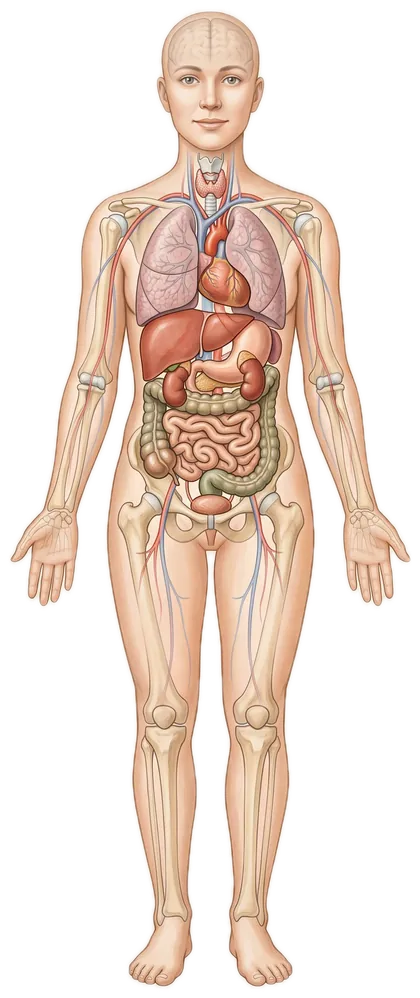
The lungs: the airways narrow in asthma and COPD, the air sacs fill with pus or fluid in a chest infection, a clot can block blood flow through the lung, or a lung can collapse. Each lets less oxygen into the blood.
The heart: when it pumps weakly (heart failure), fluid backs up into the lungs. Typical signs are breathlessness lying flat, waking at night gasping, and swollen ankles. Narrowed heart arteries can cause breathlessness on effort instead of chest pain, especially in women, older people and people with diabetes. A very fast or irregular heartbeat can do it too.
The blood and the rest of the body: anaemia leaves too few red cells to carry oxygen. An overactive thyroid, kidney failure and extra weight add to breathlessness, and very high sugar can make the breathing fast and deep. Anxiety and panic attacks cause fast breathing too, but a doctor says so only once the other causes have been ruled out.
A home oxygen reading (pulse oximeter) helps, but does not tell the whole story. In most healthy people it reads 95 to 100% at rest. A reading below 92% at rest, or one that keeps falling, needs hospital care; if you have COPD, your doctor may give you a different number to watch. In anaemia, and early in many illnesses, the reading can look normal while you are still unwell: how you feel counts more than the number.
The lungs, the heart or the blood?
Air cannot move freely when the airways narrow, as in asthma or COPD, or when the air sacs fill up, as in a chest infection. Less oxygen reaches the blood, and the oximeter reading falls.
A weak heart cannot pump blood onwards fast enough, so fluid backs up into the lungs. Breathlessness is worse lying flat, and the ankles often swell.
In anaemia there are too few red cells to carry oxygen. The few cells there still fill up with oxygen, so the oximeter reading can look normal, yet the body is short of oxygen.
Go to hospital now if
- Sudden or severe breathlessness, or too breathless to finish a sentence: call 112.
- Breathless with chest pain, fainting, or blue or grey lips, face or tongue: call 112.
- Sudden breathlessness with a swollen, painful leg, sharp chest pain, or coughing up blood: call 112. This may be a clot in the lung.
- Breathless with swelling of the lips, tongue or face, after a food, a medicine or an insect sting: call 112, and use your adrenaline pen if you have one.
- An oxygen reading below 92% at rest, or one that keeps falling, unless your doctor has given you a different number: go to hospital now.
- Your reliever inhaler is not helping, or you need it more than every four hours: go to hospital now.
- Fast, deep breathing with very high sugar, vomiting, drowsiness or confusion: go to hospital now.
- While you wait: sit upright, leaning slightly forward, and loosen tight clothing. Use your reliever inhaler if you have one, and oxygen only as your doctor prescribed it. Do not lie flat, unless you feel faint or dizzy: then lie down and raise your legs.
Call 112 or go to the nearest emergency department. Ambulance: 108 (102 in some states).
See a doctor the same day if
- Breathlessness on effort is new, or getting worse over days
- You become breathless lying flat, wake at night short of breath, or your ankles are swelling
- Breathlessness comes with fever and cough
- You have heart failure and your weight has gone up by 2 kg or more in three days
Tests that help.
Not everyone needs every test. He decides which ones are worth doing for you.
| Test | What it tells |
|---|---|
| Oxygen reading (pulse oximeter) | A clip on the finger. Useful at home too, if you know your usual number and take it at rest with warm hands. |
| Haemoglobin, thyroid, sugar and kidney tests | Look for anaemia, an overactive thyroid, diabetes and kidney problems. |
| Chest X-ray | Shows a chest infection, fluid, a collapsed lung or an enlarged heart. |
| ECG and echo | Check the heart’s rhythm and how well it pumps. |
| NT-proBNP blood test | Rises when the heart is under strain; a normal result makes heart failure unlikely. |
| Lung function test (spirometry) | Measures how hard and fast you can blow air out, to find asthma or COPD. |
| D-dimer and CT scan | Done in hospital when a clot in the lung is possible. |
Have it ready.
Tick them off as you gather them. The ticks stay on this phone only.
Online, or in person?
Do not use someone else’s inhaler, oxygen or water tablets, and do not stop your own without asking. If you have COPD, use oxygen only at the flow your doctor set: too much can be harmful for some people with COPD.
A video call can
- Work out the likely cause of breathlessness that has built up slowly, from your story and reports
- Arrange blood tests, X-ray, ECG, echo and lung function tests
- Adjust inhalers, water tablets and other medicines, and check how you use your inhaler
- Follow you up with home oxygen and weight readings
Needs a visit in person
- Sudden or severe breathlessness: that is for hospital, not a video call
- Listening to the chest, and measuring oxygen properly
- X-ray, echo and lung function tests
- Any sign in the red box: that is an emergency

Talk it through with Dr. Arya.
Bring your reports and medicines to a video consultation. He goes through them with you, in plain words, and says clearly if you need to be seen in person.
Book a video consultationDr. Prabhat Arya · MBBS, MD (Internal Medicine) · Delhi Medical Council Reg. No. DMC-83759