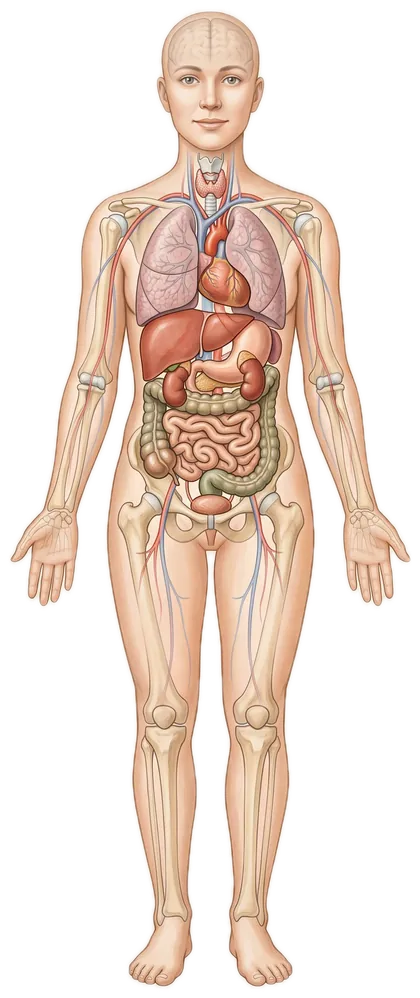
Heart disease starts in the arteries that feed the heart itself.
The heart muscle gets its own blood through small arteries on its surface, the coronary arteries. When fatty plaque narrows them, the muscle can run short of blood on effort: that is angina. When a clot suddenly blocks one, part of the muscle starts to die: that is a heart attack, and every minute counts.
In plain words.
Plaque builds up silently over years. The things that speed it up are diabetes, high BP, high cholesterol, smoking or chewing tobacco, a large waist, too little activity, and heart disease in a parent, brother or sister at a young age. People of South Asian origin tend to get heart disease earlier, often in their 40s.
Angina is a heaviness, tightness or pressure in the chest that comes on with effort, walking uphill, climbing stairs, a heavy meal or stress, and eases within a few minutes of rest. It may spread to the arm, neck, jaw or back. It is a warning that an artery is narrowed.
A heart attack feels similar but comes at rest or does not settle, often with sweating, sickness or breathlessness. Women, older people and people with diabetes may have milder or unusual symptoms: breathlessness, tiredness, discomfort in the upper tummy that feels like gas or acidity. Do not dismiss chest discomfort as gas. Treatment to open the artery works best within the first hours.
Medicines (to thin the blood, lower cholesterol and BP, and ease the heart’s work), stopping tobacco and daily activity lower the chance of a heart attack. Some people need a stent (angioplasty) or bypass surgery, which a cardiologist decides.
Angina or a heart attack?
A fatty plaque narrows one of the heart’s own arteries. At rest, enough blood still gets through to the muscle beyond it.
On effort the heart beats faster and needs more blood than the narrowed artery can carry. The muscle beyond it runs short and hurts. Rest lets it recover within minutes.
The plaque cracks and a clot forms on it, blocking the artery completely. The muscle beyond starts to die unless the artery is opened quickly: call 112.
Go to hospital now if
- Chest pain, pressure, heaviness or tightness that lasts more than five minutes, or comes on at rest, especially with sweating, sickness, breathlessness, or spreading to the arm, jaw or back: call 112. Do not wait to see if it passes, and do not drive yourself.
- Your usual angina is not settling with rest, or with your under-the-tongue spray or tablet (GTN or sorbitrate) as prescribed: call 112. If you were told to take a second dose, it is fine to do so while waiting, but do not delay the call.
- Sudden breathlessness, fainting, or a very fast or irregular heartbeat with chest discomfort: call 112.
- Someone collapses and is not breathing normally: call 112, and start hands-only CPR, pushing hard and fast in the centre of the chest, until help arrives.
- While you wait: stop what you are doing and sit or lie in whatever position is comfortable. Chew one aspirin or Ecosprin 300 mg tablet (not the low-dose 75 mg one) only if the doctor or the 112 call handler advises it and you are not allergic to it. Unlock the door and keep your phone with you.
Call 112 or go to the nearest emergency department. Ambulance: 108 (102 in some states).
See a doctor the same day if
- Chest discomfort or breathlessness comes on with effort and settles with rest, for the first time
- Your usual angina is coming more often, with less effort, or lasting longer
- You had chest pain that has now settled: it still needs an ECG today. If the pain was in the last 12 hours, go to a hospital emergency for an ECG and a blood test
Tests that help.
Not everyone needs every test. He decides which ones are worth doing for you.
| Test | What it tells |
|---|---|
| ECG | A quick recording of the heart’s electrical activity. Can show a heart attack now or in the past, though it can be normal between episodes of angina. |
| Troponin blood test | Done in hospital when a heart attack is suspected; it rises when heart muscle is damaged. |
| Lipid profile, HbA1c and kidney function | Measure the risks that can be treated: cholesterol, sugar and kidney health. |
| Echo (ultrasound of the heart) | Shows how well the heart pumps and whether any part of the muscle has been damaged. |
| Treadmill test (TMT) or stress echo | Records the heart during effort, to bring out angina safely under supervision. |
| CT coronary angiography or coronary angiography | Pictures of the heart arteries themselves. A cardiologist decides who needs them. |
Have it ready.
Tick them off as you gather them. The ticks stay on this phone only.
Online, or in person?
After a stent, do not stop blood-thinning tablets such as aspirin, clopidogrel, prasugrel or ticagrelor without asking your cardiologist, even before a dental or other procedure: a clot can form inside the stent. Never take a GTN spray or sorbitrate within a day or two of a medicine for erection problems such as sildenafil or tadalafil: together they can drop the BP dangerously.
A video call can
- Look at your overall heart risk, not just one number
- Arrange the right tests, and go through ECG and echo reports with you
- Adjust medicines for BP, sugar and cholesterol, and help you stop tobacco
- Follow you up after a heart attack or stent, alongside your cardiologist
Needs a visit in person
- Chest pain happening now: that is for hospital, not a video call
- ECG, treadmill test and echo
- Angiography, stents or bypass surgery with a cardiologist
- Any sign in the red box: that is an emergency
Talk it through with Dr. Arya.
Bring your reports and medicines to a video consultation. He goes through them with you, in plain words, and says clearly if you need to be seen in person.
Book a video consultationDr. Prabhat Arya · MBBS, MD (Internal Medicine) · Delhi Medical Council Reg. No. DMC-83759