Loose motions are dangerous for the water they take, and ORS puts it back.
Loose motions (diarrhoea) means passing loose or watery stool three or more times a day. Most bouts come from a germ in water or food and settle within a few days. The real danger, above all for small children and older people, is the water and salts lost with every stool.
In plain words.
Short bouts are usually caused by a virus, sometimes by bacteria or parasites from unsafe water or food. Food poisoning often brings vomiting within hours of a meal. Stools with blood and mucus, with fever and cramps, are called dysentery and may need a specific medicine. Very large amounts of watery, rice-water stool can be cholera, which dries the body out within hours.
ORS is the main treatment. Mix one packet in the amount of clean water written on it. After every loose stool give ORS: a quarter to half a cup (about 50–100 mL) for a child under two, half to one cup (about 100–200 mL) for older children, and as much as wanted for adults. If there is no packet, six level teaspoons of sugar and half a level teaspoon of salt in one litre of clean water will do. Keep eating light, normal food, and keep breastfeeding babies. Children are usually also given zinc for 10 to 14 days. Most loose motions need no antibiotic.
Loose motions lasting more than two weeks are a different problem: a parasite such as giardia or amoeba, milk not suiting the gut, coeliac disease (a reaction to wheat), an overactive thyroid, IBS, inflammation of the bowel, or a medicine such as metformin. These need a proper look rather than more antibiotics.
Water across the gut wall
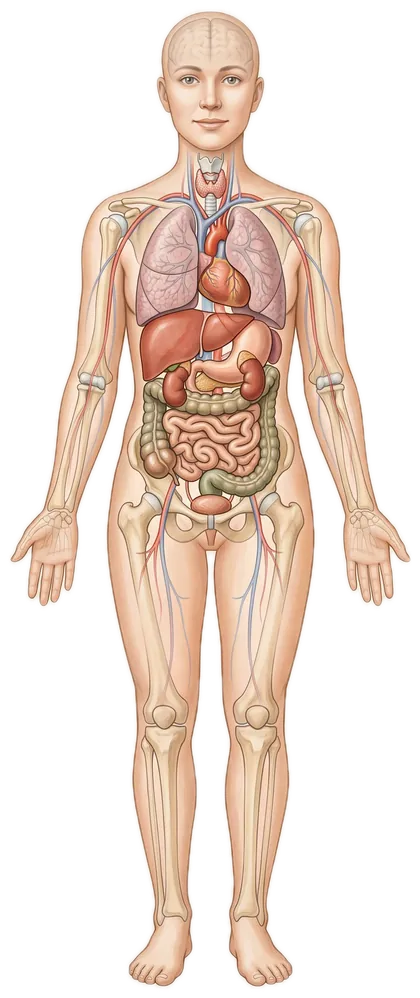
Every day litres of fluid pass into the gut with food and digestive juices. The lining takes nearly all of it back into the blood, so the stool leaves soft but formed and the body’s water stays topped up.
A germ or its poison turns the flow around: the lining pours water and salts out into the gut, faster than it can take them back. Stools turn watery and the body’s water level falls. That is what makes loose motions dangerous.
ORS has salt and sugar in the right amounts. The lining can still carry salt and sugar in together, and water follows them back into the blood, even while the loose motions go on. ORS replaces what is lost; it does not stop the motions at once.
Go to hospital now if
- Very little or no urine for 8 hours, a very dry mouth, or feeling faint when you stand: go to hospital now. You may need fluids through a drip.
- A baby or small child who is drowsy or floppy, will not drink, has sunken eyes, or has had no wet nappy for 6 hours: go to hospital now.
- You cannot keep any fluid down because of vomiting: go to hospital now.
- Large amounts of blood in the stool, or black, sticky, tarry stools (not just the dark stools iron tablets cause): go to hospital now.
- Huge amounts of watery, rice-water stool: go to hospital now. This can be cholera.
- Severe tummy pain, high fever or confusion: go to hospital now.
- Blood in the stool, or mucus with fever, or loose motions in a baby under six months: see a doctor today.
- Diabetes, kidney disease, heart failure, pregnancy, or age over 65, with loose motions and not keeping up with drinking: see a doctor today. Some of your usual medicines may need pausing while you are dried out.
Call 112 or go to the nearest emergency department. Ambulance: 108 (102 in some states).
See a doctor within a week if
- Loose motions have lasted more than three days without getting better
- They keep coming back, or have lasted more than two weeks
- You are losing weight, or the loose motions wake you at night
- They started with a new medicine, or during or after a course of antibiotics
Tests that help.
Not everyone needs every test. He decides which ones are worth doing for you.
| Test | What it tells |
|---|---|
| Usually none | Most short bouts settle in a few days and need no test. |
| Stool routine and microscopy | Looks for pus cells, blood, and parasites such as giardia or amoeba. |
| Stool culture | Grows bacteria when there is blood, high fever, or the illness is severe or lasting. |
| Sodium, potassium and creatinine | Show how much salt and water has been lost, and whether the kidneys are strained. |
| Complete blood count (CBC) | Signs of infection, or of anaemia when loose motions have gone on for long. |
| For loose motions lasting weeks | Thyroid, a coeliac blood test and stool calprotectin; sometimes a colonoscopy, done in person. |
Have it ready.
Tick them off as you gather them. The ticks stay on this phone only.
Online, or in person?
Do not take antibiotics or combination “loose motion” tablets (such as ofloxacin with ornidazole) on your own: most loose motions are caused by viruses, and these can do harm. Avoid medicines that stop the motions, such as loperamide, if there is blood in the stool or a high fever, and never give them to young children. Glucose water, soft drinks and packaged juices are not ORS; their sugar can make loose motions worse.
A video call can
- Judge how dried out you are from your story and simple checks at home
- Plan ORS: which kind, how much and how often
- Decide whether an antibiotic or other medicine is actually needed
- Tell you which of your usual medicines to pause while you are unwell
- Plan and read tests when loose motions last for weeks
Needs a visit in person
- Examining someone who is very dry, drowsy or in severe pain
- Fluids through a drip
- Urgent blood tests
- A colonoscopy for long-lasting loose motions
- Any sign in the red box: that is an emergency

Talk it through with Dr. Arya.
Bring your reports and medicines to a video consultation. He goes through them with you, in plain words, and says clearly if you need to be seen in person.
Book a video consultationDr. Prabhat Arya · MBBS, MD (Internal Medicine) · Delhi Medical Council Reg. No. DMC-83759