Fatty liver is extra fat stored inside the liver.
A healthy liver holds a little fat. When more than about one in twenty of its cells fill up with fat, it is called fatty liver. It is very common, usually causes no symptoms, and is often found by chance on an ultrasound.
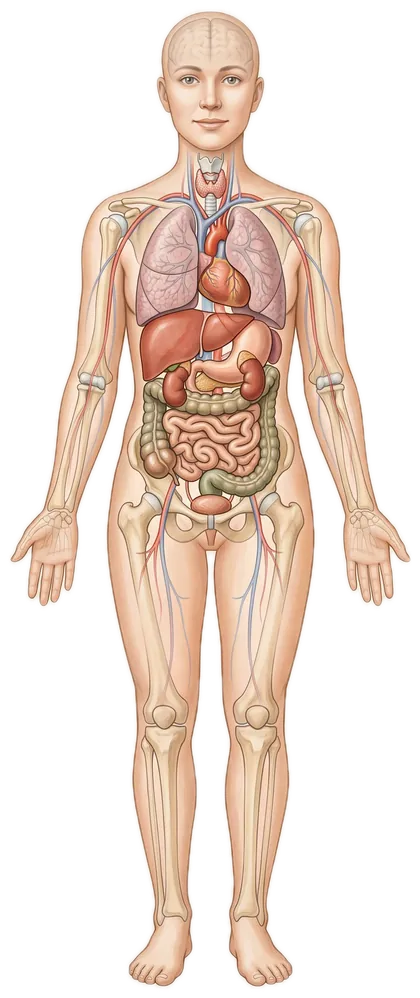
In plain words.
Most fatty liver goes with extra weight around the waist, high sugar, high cholesterol and high BP. Doctors now call this kind MASLD (metabolic dysfunction-associated steatotic liver disease; you may also see its older name, NAFLD). Alcohol causes fatty liver too, and so can some medicines.
In most people the fat stays quiet. In some it inflames the liver, and over years that can leave scarring (fibrosis) and, at worst, cirrhosis. People with fatty liver also have a higher risk of heart disease, so the rest of the body matters as much as the liver.
An ultrasound “grade 1, 2 or 3” describes how bright the liver looks, not how much damage there is. Checking for scarring needs other tests, below.
Inside the liver, up close
Liver cells packed side by side, each with its centre (nucleus), busy cleaning the blood and storing fuel.
Droplets of fat build up inside the cells and push their centres aside. Early on, liver fat can go down as body weight comes down.
In some people, long-standing inflammation leaves bands of scar between the cells. This is why scarring is checked for, not only the fat.
Go to hospital now if
See a doctor within a day or two if
- Eyes or skin turn yellow, or urine turns dark
- The tummy or legs slowly swell
- You bruise or bleed easily
Tests that help.
Not everyone needs every test. He decides which ones are worth doing for you.
| Test | What it tells |
|---|---|
| Liver function tests (LFT) | ALT and AST are often raised, but can be normal even with fatty liver. |
| Ultrasound of the abdomen | Shows the fat. It cannot measure scarring well. |
| FIB-4 score | A simple calculation from your age, ALT, AST and platelet count that estimates the chance of scarring. Less reliable under 35 or over 65. |
| FibroScan (elastography) | A painless scan of liver stiffness, when the score is not low. |
| HbA1c and lipid profile | Sugar and cholesterol, which usually travel with fatty liver. |
| Hepatitis B and C tests | To make sure another cause is not being missed. |
Have it ready.
Tick them off as you gather them. The ticks stay on this phone only.
Online, or in person?
Avoid starting liver “tonics” or herbal remedies without asking: some harm the liver they are sold to protect.
A video call can
Needs a visit in person
- A FibroScan, or a liver specialist when scarring is likely
- Examining the tummy for swelling or an enlarged liver or spleen
- Yellowness with drowsiness, or vomiting blood: that is an emergency
Talk it through with Dr. Arya.
Bring your reports and medicines to a video consultation. He goes through them with you, in plain words, and says clearly if you need to be seen in person.
Book a video consultationDr. Prabhat Arya · MBBS, MD (Internal Medicine) · Delhi Medical Council Reg. No. DMC-83759