Gallbladder stones are common, and many never cause trouble.
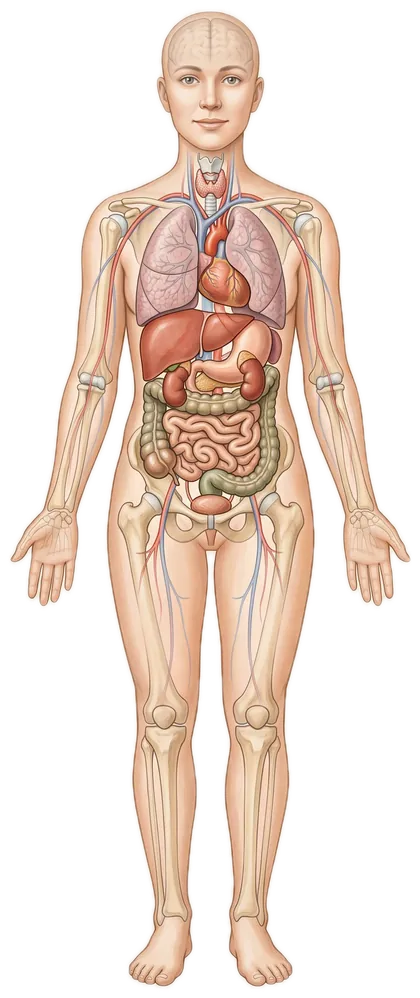
The gallbladder is a small bag under the liver that stores bile, a juice that helps digest fat. After a meal it squeezes bile into the gut. Stones form when bile turns thick and crystals clump together. Many people carry them for years without knowing. Trouble starts when a stone blocks the way out.
In plain words.
Stones are more common in women, after 40, in people carrying extra weight, during and after pregnancy, after losing weight very fast, and when they run in the family. They are often found by chance on an ultrasound done for something else.
Silent stones, found by chance and causing no pain, usually need no operation. Your doctor may still advise one in some cases, for example very large stones, a thickened gallbladder wall or a growth (polyp) in it.
Gallstone pain comes when the gallbladder squeezes against a stone jammed in its outlet. It is a steady, severe ache in the upper right or middle of the tummy, often after a meal or at night, that can spread to the right shoulder blade. It lasts from about half an hour to a few hours, then settles. Once pain has started, it tends to come back, and the usual answer is to remove the gallbladder by keyhole surgery. You can live and eat normally without it.
A stone can also cause bigger trouble: an infected gallbladder (pain that does not settle, with fever), a stone stuck in the bile duct (yellow eyes, dark urine, pale stools, sometimes fever and shivering), or pancreatitis, a severe pain going through to the back with vomiting. These need hospital care.
No diet, powder or tablet reliably dissolves gallbladder stones. A tablet (ursodeoxycholic acid) helps only a few people with small stones, takes many months, and the stones often come back.
Silent, painful or blocking?
Bile flows from the liver into the gallbladder, where it is stored, and on down the bile duct into the gut. Stones sit quietly in the gallbladder. Many people never feel them, and silent stones usually need no treatment.
After a meal, often a rich one, the gallbladder squeezes and a stone jams in its outlet. A steady, severe pain builds in the upper right tummy and can spread to the right shoulder blade. It settles in a few hours, but tends to come back.
A stone slips into the bile duct and blocks it. Bile backs up into the liver and the blood: yellow eyes, dark urine and pale stools. With fever and shivering, the duct is infected: go to hospital now.
Go to hospital now if
- Tummy pain that is severe or has not settled after a few hours, especially with fever or shivering: go to hospital now.
- Yellow eyes or skin together with tummy pain, fever or shivering: go to hospital now.
- Severe pain in the upper tummy going through to the back, with vomiting: go to hospital now. It can be pancreatitis.
- Vomiting again and again so you cannot keep fluids down, or feeling confused, very drowsy or faint: call 112.
- You are pregnant (after about 20 weeks) or have given birth in the last six weeks, and have pain in the upper right or middle of the tummy, with or without headache, blurred vision or sudden swelling of the face or hands: go to hospital now. It can be a serious form of high BP of pregnancy.
- Upper tummy or chest pain with sweating, breathlessness or pain spreading to the arm or jaw can be the heart, not the gallbladder: call 112.
Call 112 or go to the nearest emergency department. Ambulance: 108 (102 in some states).
See a doctor within a day or two if
- Yellow eyes or skin, dark urine or pale stools, even without pain
- You had pain like gallstone pain that has now settled: it needs an ultrasound and a plan
- You are pregnant and have tummy pain that has settled: tell your doctor or midwife the same day and get your BP checked
Tests that help.
Not everyone needs every test. He decides which ones are worth doing for you.
| Test | What it tells |
|---|---|
| Ultrasound of the abdomen | The main test. Shows stones, the thickness of the gallbladder wall, and whether the bile duct is widened. |
| Liver function tests (LFT) | Rise when a stone blocks the bile duct; bilirubin causes the yellow colour. |
| Complete blood count | A high white cell count points to infection. |
| Amylase or lipase | Done when pancreatitis is suspected, usually in hospital. |
| MRCP (a special MRI scan) | Looks for stones inside the bile duct without a tube or cut. |
| ERCP | A tube passed through the mouth to the bile duct to take a stone out. Done by a specialist when a duct stone is found. |
Have it ready.
Tick them off as you gather them. The ticks stay on this phone only.
Online, or in person?
Gallstone pain is often mistaken for acidity or gas, and acidity tablets do not help it. Do not take repeated painkiller injections for attacks without finding the cause. After the gallbladder is removed, some people have looser stools for a while; this usually settles.
A video call can
- Go through ultrasound and blood reports and explain what they mean for you
- Tell apart gallstone pain from acidity, the heart and other causes
- Advise whether silent stones need anything, and when to see a surgeon
- Check liver tests and recovery after the gallbladder is removed
Needs a visit in person
- Pain happening now, or any sign in the red box: that is for hospital
- Ultrasound and blood tests
- Surgery to remove the gallbladder, or ERCP for a duct stone

Talk it through with Dr. Arya.
Bring your reports and medicines to a video consultation. He goes through them with you, in plain words, and says clearly if you need to be seen in person.
Book a video consultationDr. Prabhat Arya · MBBS, MD (Internal Medicine) · Delhi Medical Council Reg. No. DMC-83759