Acidity is stomach acid burning where it shouldn’t.
The stomach makes strong acid to digest food, and its lining normally protects itself. The burning people call acidity usually comes from one of two things: acid splashing up into the food pipe, or an irritated stomach lining.
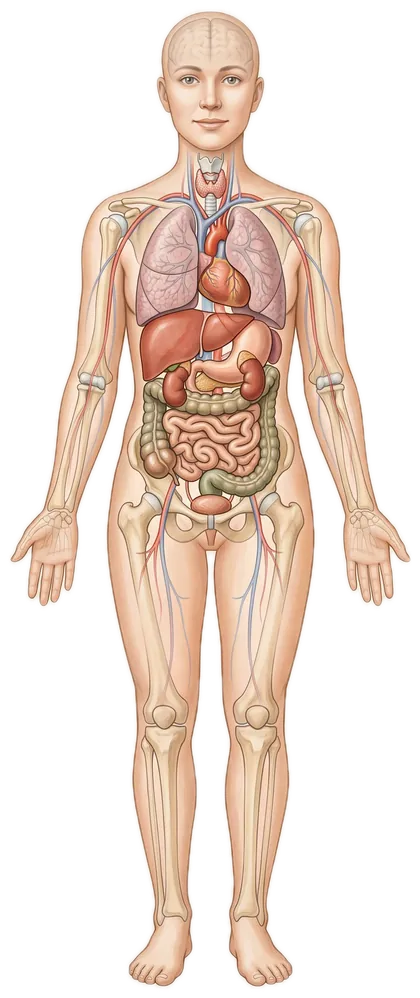
In plain words.
Acid reflux (heartburn, GERD): a ring of muscle, a valve, sits where the food pipe meets the stomach. When it relaxes at the wrong time, acid rises into the food pipe and burns behind the breastbone.
Gastritis: the stomach’s own lining becomes irritated or inflamed, giving a burning or gnawing ache in the upper tummy. Common causes are painkillers such as ibuprofen, diclofenac or aspirin, alcohol, and a stomach infection called H. pylori.
Common triggers: large or late meals, lying down soon after eating, fried and very spicy food, tea and coffee on an empty stomach, smoking, extra weight, and stress.
Where the burning comes from
Acid stays in the stomach. The valve at the top closes after each swallow, and a layer of mucus protects the lining.
The valve relaxes at the wrong time and acid rises into the food pipe, which lacks the stomach’s protective mucus layer: that is heartburn.
The stomach’s own lining becomes red and sore, from painkillers, alcohol or an infection, and the acid stings it.
Go to hospital now if
- You vomit blood, or something that looks like coffee grounds.
- Stools turn black and sticky, like tar.
- There is severe tummy pain that will not settle, or you feel faint.
- Chest pain, pressure or burning that is new, comes on with effort, or comes with sweating, breathlessness, faintness, or pain in the arm, jaw or back, even if it feels like gas: that can be the heart. Call 112.
Call 112 or go to the nearest emergency department. Ambulance: 108 (102 in some states).
These need an endoscopy soon
- Food sticking, or pain on swallowing
- Losing weight without trying
- Vomiting again and again
- Anaemia on a blood test
- Symptoms starting for the first time after about 45, or with a family history of stomach cancer, or not better after a few weeks of treatment
Tests that help.
Not everyone needs every test. He decides which ones are worth doing for you.
| Test | What it tells |
|---|---|
| Often none at first | Typical acidity without warning signs can be treated and watched. |
| H. pylori test | A breath or stool test for the stomach infection that causes gastritis and ulcers. Your doctor may ask you to stop acidity tablets such as pantoprazole about two weeks before, or the test can wrongly come out negative. Do not stop them on your own if they were given to protect your stomach. |
| Blood count (CBC) | Anaemia can be a sign of slow bleeding from the stomach. |
| Endoscopy | A thin camera through the mouth to look at the food pipe and stomach, when there are warning signs. |
| ECG | When chest burning could be coming from the heart. |
Have it ready.
Tick them off as you gather them. The ticks stay on this phone only.
Online, or in person?
Do not stop aspirin or blood thinners prescribed for the heart or a stroke without asking your doctor. Long-term acidity tablets should be reviewed by a doctor, not simply continued for years.
A video call can
- Work out whether it sounds like reflux, gastritis or something else
- Look for triggers and medicines that make it worse
- Plan treatment, meals and timings, and follow up
- Say clearly when an endoscopy is needed
Needs a visit in person
- An endoscopy
- Examining the tummy when the pain is severe
- Vomiting blood or black stools: that is an emergency

Talk it through with Dr. Arya.
Bring your reports and medicines to a video consultation. He goes through them with you, in plain words, and says clearly if you need to be seen in person.
Book a video consultationDr. Prabhat Arya · MBBS, MD (Internal Medicine) · Delhi Medical Council Reg. No. DMC-83759