Black stools or vomiting blood need hospital now.
Both usually mean bleeding from the food pipe, the stomach or the first part of the bowel. The bleeding can be slow and hidden, or fast enough to be life-threatening, and there is no way to tell which at home. Go to hospital now, even if you feel well.
In plain words.
Black stools from bleeding are jet black, sticky like tar, and smell unusually strong: the blood has been digested on its way down. Iron tablets and some stomach medicines (containing bismuth) also turn stools dark or black, but these stools are usually formed and not sticky. If you are not sure, treat it as bleeding and go.
Vomiting blood may be bright red, dark red, or brown and grainy like coffee grounds, which is blood that has sat in the stomach for a while.
Common causes: an ulcer in the stomach or the duodenum (the first part of the bowel), often from painkillers such as ibuprofen, diclofenac or aspirin, or from a germ called H. pylori; swollen veins in the food pipe in people with liver disease or heavy drinking; a tear in the food pipe after heavy vomiting; and an irritated stomach lining from alcohol. Blood thinners make any bleed heavier.
In hospital, a drip, blood tests and, if needed, a blood transfusion come first. An endoscopy (a thin camera passed through the mouth) finds the bleeding point and can often stop it there and then. Treating the cause afterwards, such as clearing H. pylori, helps stop it coming back.
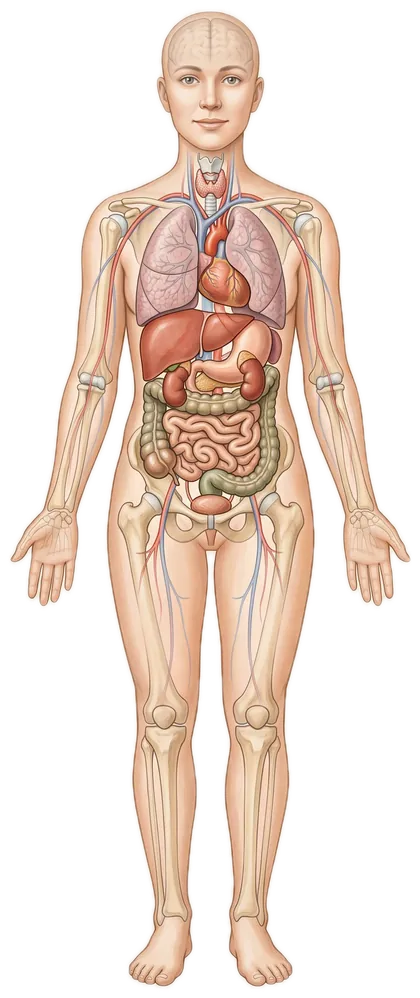
Where the blood goes
An ulcer in the stomach or the start of the bowel wears into a blood vessel and bleeds inside. It may not hurt at all, especially in people taking painkillers.
Blood that collects in the stomach may be vomited: bright red, or brown and grainy like coffee grounds. Go to hospital now.
Blood that travels down through the bowel is digested and turns black, and comes out as black, sticky, smelly stools. Either way the body is losing blood. Go to hospital now.
Go to hospital now if
- Vomiting blood, or vomit that looks like coffee grounds: go to hospital now. If there is a lot of blood, or you feel faint, call 112.
- Black, sticky, tar-like stools: go to hospital now, even if you feel well.
- With dizziness, fainting, a fast heartbeat, cold and sweaty skin, breathlessness or confusion: call 112. These are signs of heavy blood loss.
- Passing a lot of red or maroon blood from the back passage: call 112.
- On the way: eat and drink nothing, in case you need an endoscopy. Take all your medicines, or a list of them, with you. Lie down if you feel faint, on your side if you are vomiting. Do not drive yourself.
Call 112 or go to the nearest emergency department. Ambulance: 108 (102 in some states).
See a doctor the same day if
- Your stools are dark but formed, not sticky or tar-like, you take iron tablets, and you feel well. If they are black and sticky, or you feel dizzy or faint, go to hospital now
- You vomited a small streak of blood after heavy retching, and otherwise feel well
- You have burning or pain in the upper tummy and take painkillers or blood thinners
Tests that help.
Not everyone needs every test. He decides which ones are worth doing for you.
| Test | What it tells |
|---|---|
| Haemoglobin (CBC) | Shows how much blood has been lost, and is repeated. Soon after a bleed it can still look normal. |
| Blood group and cross-match | Done in case a blood transfusion is needed. |
| Urea, kidney and liver tests, and a clotting test (INR) | A raised urea fits a bleed high in the gut; liver and clotting tests look for liver disease. |
| Upper GI endoscopy | A thin camera through the mouth into the food pipe, stomach and duodenum. It finds the bleeding point and can often treat it at once. |
| H. pylori test | Looks for the germ behind many ulcers; clearing it helps stop ulcers coming back. |
Have it ready.
Tick them off as you gather them. The ticks stay on this phone only.
Online, or in person?
Do not stop aspirin, clopidogrel or another blood thinner on your own after a bleed, and do not restart one on your own either: with a stent or heart disease, stopping can bring on a heart attack or stroke. The doctors treating the bleed and your heart decide this together. Painkillers such as ibuprofen and diclofenac, taken with a blood thinner, raise the chance of bleeding a great deal.
A video call can
- Follow you up after a hospital stay for a bleed: medicines, iron and repeat blood tests
- Check that H. pylori has cleared, and review painkillers and blood thinners with your other doctors
- Look for the cause of long-standing anaemia
- Look after liver disease, if that was the cause, alongside a liver specialist
Needs a visit in person
- Black stools or vomiting blood now: that is for hospital, never a video call
- Endoscopy and blood transfusion
- Blood tests on the day
- Any sign in the red box: that is an emergency

Talk it through with Dr. Arya.
Bring your reports and medicines to a video consultation. He goes through them with you, in plain words, and says clearly if you need to be seen in person.
Book a video consultationDr. Prabhat Arya · MBBS, MD (Internal Medicine) · Delhi Medical Council Reg. No. DMC-83759