Treat chest pain as your heart until a test says otherwise.
Most chest pain is not a heart attack. But the dangerous kinds can feel just like the harmless ones, and in a heart attack every minute counts. Chest pain that is new, lasts more than a few minutes, or comes on at rest needs 112, not a wait to see if it passes.
In plain words.
Pain from the heart (angina or a heart attack) is usually a heaviness, tightness, pressure or squeezing in the middle of the chest rather than a sharp point. It can spread to one or both arms, the neck, jaw, back or upper tummy, and may come with sweating, sickness, breathlessness or feeling faint. Women, older people and people with diabetes may feel only breathlessness, tiredness, or discomfort that seems like gas or acidity.
Other serious causes need hospital just as fast: a clot in the lung (sudden sharp pain and breathlessness, often after a long journey, an operation or bed rest, or with a swollen leg); a tear in the body’s main artery, the aorta (sudden, severe, tearing pain going through to the back); and a collapsed lung (sudden sharp pain on one side, with breathlessness).
Common, less dangerous causes: acidity and reflux (burning behind the breastbone, worse after meals or lying down), a strained chest muscle or rib (sore when pressed or on twisting), a chest infection (pain on breathing in, with fever and cough), shingles (burning pain on one side, then a band of blisters), and anxiety or panic attacks. A doctor can only say it is one of these once the dangerous causes have been ruled out.
You cannot tell them apart by how the pain feels, by pressing on the chest, or by whether an antacid helps. An ECG and a blood test in hospital can. If in doubt, go.
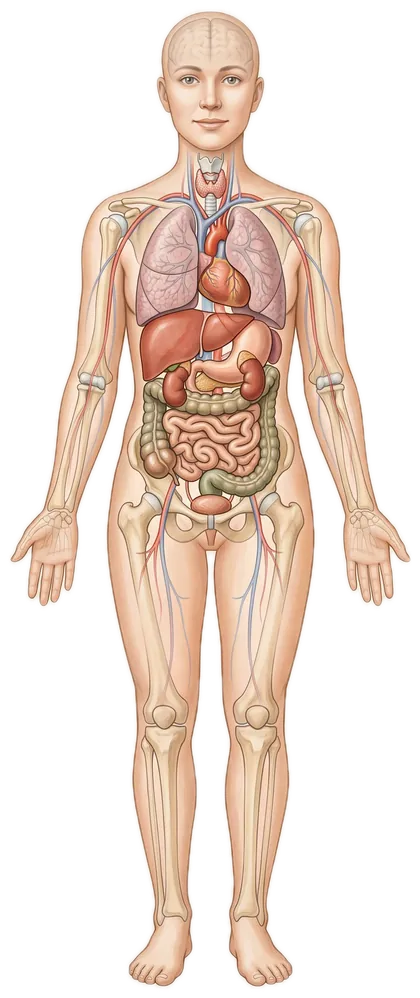
The heart, or something else?
Pain from the heart is usually a heaviness or tightness in the middle of the chest. It can spread to the arms, jaw, back or upper tummy, often with sweating or breathlessness. If it lasts more than a few minutes or comes at rest, call 112.
The food pipe, the chest wall and the lining of the lungs can hurt too. Some of these are harmless, but a clot in the lung or a tear in the main artery is as serious as a heart attack.
How the pain feels cannot safely tell these apart. An ECG and a blood test in hospital can. So treat new or lasting chest pain as the heart, and call 112.
Go to hospital now if
- Chest pain, pressure, heaviness or tightness that lasts more than five minutes, or comes on at rest, especially with sweating, sickness, breathlessness, feeling faint, or spreading to the arm, jaw or back: call 112. Do not wait to see if it passes, and do not drive yourself.
- Sudden, severe, tearing or ripping pain in the chest or going through to the back: call 112.
- Sudden sharp chest pain with breathlessness, coughing up blood, or a swollen, painful leg: call 112. This may be a clot in the lung.
- Chest pain with fainting, a very fast or irregular heartbeat, or blue or grey lips: call 112.
- Your usual angina is not settling with rest, or with your under-the-tongue spray or tablet (GTN or sorbitrate) as prescribed: call 112.
- Someone collapses and is not breathing normally: call 112, and start hands-only CPR, pushing hard and fast in the centre of the chest, until help arrives.
- While you wait: stop what you are doing and sit or lie in whatever position is comfortable. Chew one aspirin or Ecosprin 300 mg tablet (not the low-dose 75 mg one) only if the doctor or the 112 call handler advises it and you are not allergic to it. Unlock the door and keep your phone with you.
Call 112 or go to the nearest emergency department. Ambulance: 108 (102 in some states).
See a doctor the same day if
- Chest discomfort comes on with effort and settles with rest, for the first time
- You had chest pain that has now settled: it still needs an ECG today. If the pain was in the last 12 hours, go to a hospital emergency for an ECG and a blood test
- Chest pain comes with fever and cough
- Burning pain on one side of the chest, with or before a band of blisters
Tests that help.
Not everyone needs every test. He decides which ones are worth doing for you.
| Test | What it tells |
|---|---|
| ECG | The first test for chest pain: quick, painless, and it can show a heart attack happening now. A normal ECG does not rule one out on its own, so it is often repeated. |
| Troponin blood test | Done in hospital. It rises when heart muscle is damaged, sometimes only hours after the pain starts, so it is often repeated. |
| Chest X-ray | Looks for a chest infection, a collapsed lung, fluid, or a widened main artery. |
| Echo (ultrasound of the heart) | Shows how well the heart pumps and whether any part of it is damaged. |
| CT scan | Done in hospital when a clot in the lung or a tear in the main artery is suspected. |
| Treadmill test, CT coronary angiography or coronary angiography | Look for narrowed heart arteries once an emergency has been ruled out. A cardiologist decides which. |
| Endoscopy | A camera test of the food pipe and stomach, when acidity or an ulcer is the likely cause and the heart has been checked. |
Have it ready.
Tick them off as you gather them. The ticks stay on this phone only.
Online, or in person?
Do not treat new chest pain at home with antacids or painkillers to see if it passes. Never take a GTN spray or sorbitrate within a day or two of a medicine for erection problems such as sildenafil or tadalafil: together they can drop the BP dangerously.
A video call can
- Go through chest pain that has settled and been checked in hospital, with your ECG and blood reports
- Help decide which further tests make sense, such as a treadmill test, echo or endoscopy
- Treat the causes that can wait, such as acidity, and the heart risks: BP, sugar, cholesterol and tobacco
- Follow you up after a hospital visit for chest pain, alongside your cardiologist
Needs a visit in person
- Chest pain happening now: that is for 112 and hospital, never a video call
- Chest pain in the last 12 hours that has not been checked: a hospital emergency, for an ECG and a blood test
- ECG, troponin, echo and treadmill tests
- Any sign in the red box: that is an emergency

Talk it through with Dr. Arya.
Bring your reports and medicines to a video consultation. He goes through them with you, in plain words, and says clearly if you need to be seen in person.
Book a video consultationDr. Prabhat Arya · MBBS, MD (Internal Medicine) · Delhi Medical Council Reg. No. DMC-83759